
Most business owners can tell you roughly what they pay in software subscriptions. Very few can tell you what they pay for the manual work happening between those tools. That's the number that actually hurts.
The cost of manual work doesn't show up on an invoice. It shows up in payroll hours spent copying data, in leads that fell through because someone forgot to follow up, in the Monday morning reconciliation that takes two hours and produces the same numbers every time. It's real money. It's just hiding in plain sight.
Industry research consistently puts administrative overhead at 10-15% of annual revenue for service businesses. For a business doing $500,000 a year, that's $50,000 to $75,000 that isn't going to growth, hiring, or margin. It's going to tasks that software could handle while everyone sleeps.
This post maps where those hours are actually going, and what it looks like when they come back.
The Hours Nobody Tracks: Why They're the Most Expensive
When you look at your payroll, you see a number. What you don't see is the breakdown: how much of that cost is judgment, creativity, and client work, and how much is data entry, form processing, and copy-paste tasks between systems that both have APIs and have never been introduced.
Research from McKinsey and Asana puts knowledge worker time spent on repetitive, automatable tasks somewhere between 20% and 30% of the workday. For a 5-person team earning an average of $60,000 per year, that's $60,000 to $90,000 per year in salary allocated to work that a properly configured workflow could handle in the background.
Most business owners don't think of it that way. They think of it as 'operations.' The line between 'this is how we run' and 'this is costing us' blurs when the process has been normal for long enough.
(The answer to 'how long have you been doing it this way?' is almost always 'since we hired the second person.' Which is to say: it has never been reviewed.)
The first step isn't building an automation. It's auditing what the team actually does with their time. The number that comes back is usually uncomfortable.
Every Manual Step Is a Place Something Can Go Wrong
Manual processes don't just cost time. They cost accuracy.
When data moves between systems by hand, from an intake form to a CRM, from a CRM to a billing platform, from a billing platform to a spreadsheet, each transfer is a chance for a transposition error, a missed field, or a record that gets created twice. Or not at all.
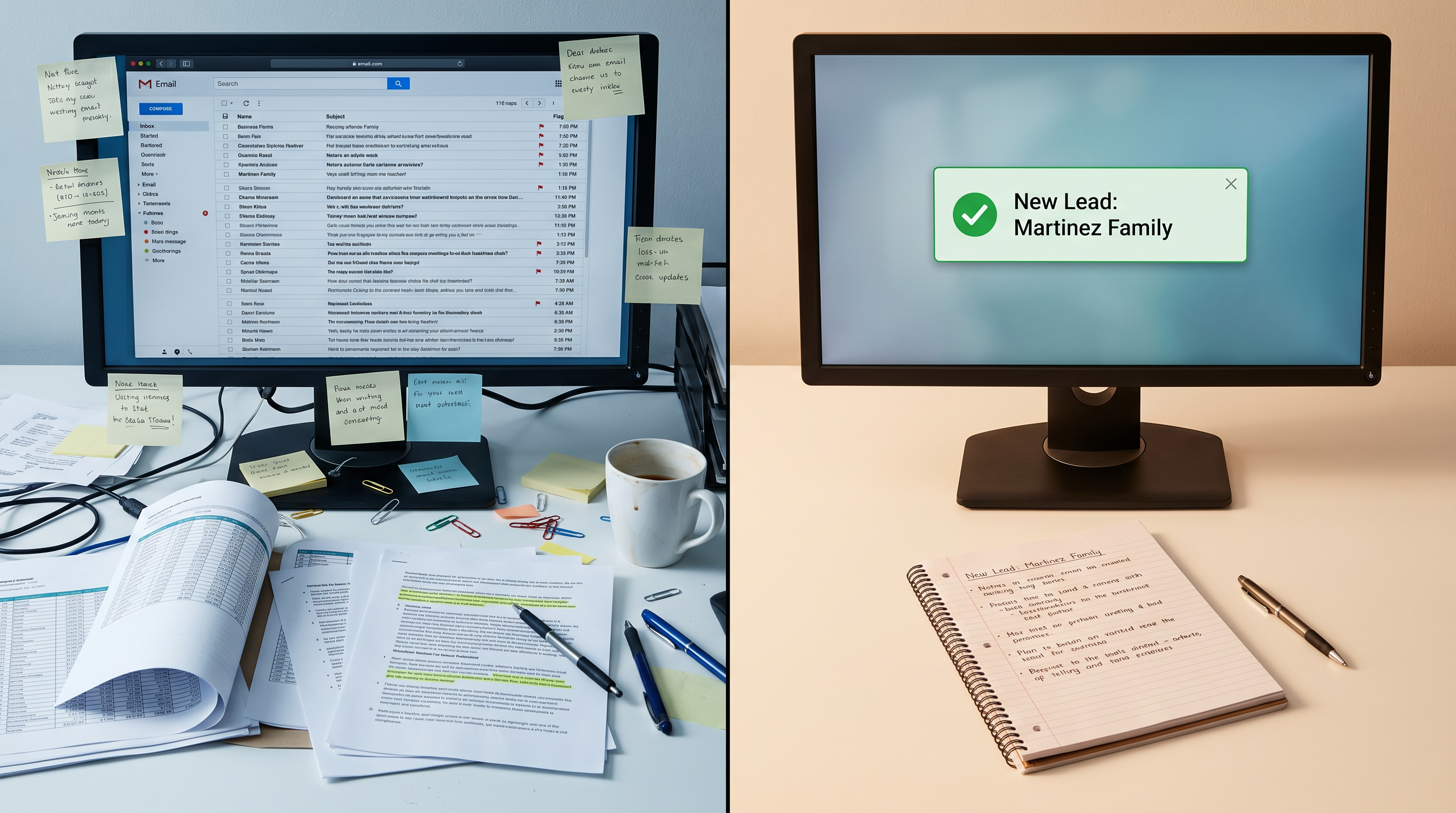
The downstream cost of a data error depends on where it happens. A wrong email address means a lead never gets the follow-up sequence. A missed CRM entry means a deal gets counted twice in the pipeline forecast. A billing error means a conversation with an unhappy client about a charge they already paid.
None of these show up as 'manual process errors' in your reporting. They show up as client service issues, pipeline inaccuracies, and one-off corrections that somebody handles with a quick apology and a half-hour fix. The fix always takes longer than it would have to get the data right the first time.
Automated data transfer doesn't just move faster. It moves consistently. The same fields populate every time, in the same format, without someone checking whether they copied the right row.
It's Not Just the Hours. It's What Those Hours Could Have Been.
This is the part most ROI calculators miss.
When a business owner or operations manager spends three hours every Monday building the weekly report from scratch, those aren't just three hours of cost. They're three hours that didn't go to client work, to reviewing the pipeline, to a sales conversation, or to the hire they've been putting off because they haven't had time to interview anyone.
The ROI of automation isn't only in the hours saved. It's in what those hours become. When your team stops doing data entry, they start doing follow-ups. When they stop building the same report every week, they start acting on the report.
I worked with a South Florida insurance agency that was spending 6+ hours per week on a manual workflow pulling claim data from three sources and formatting it into the same report every Friday afternoon. The automation took less time to build than the report took in a single week. The hours that came back went straight into client outreach, and the number of active accounts under management went up within 60 days.
The manual process always costs more than the automation. The question is usually: what finally made you map it out?
The Process That Works Is the Most Dangerous One
The workflows that don't get automated aren't usually the broken ones. Those get fixed.
The workflows that cost the most are the ones that work well enough that nobody questions them. The daily email download that someone processes by hand. The client onboarding checklist that lives in someone's head and gets done right about 80% of the time. The approval process that routes through one person's inbox because that's how it started.
'Good enough' processes are the ones that scale the worst. They work when the business is small. They become the bottleneck when the team grows and the same person is still doing the same manual task they were doing in year two, except now there are three times as many of them.
There's a pattern that comes up constantly: two spreadsheets tracking the same data, one built by accounting, one by operations, neither team aware the other exists, someone manually reconciling them every Monday. The automation fix is usually under two hours to build. The manual reconciliation has been happening for three years.
The automation conversation isn't about replacing the process. It's about making the process stop depending on one person having a good morning.
How to Find What's Actually Costing You
You don't need an automation consultant to start this. You need a piece of paper and an honest conversation with your team.
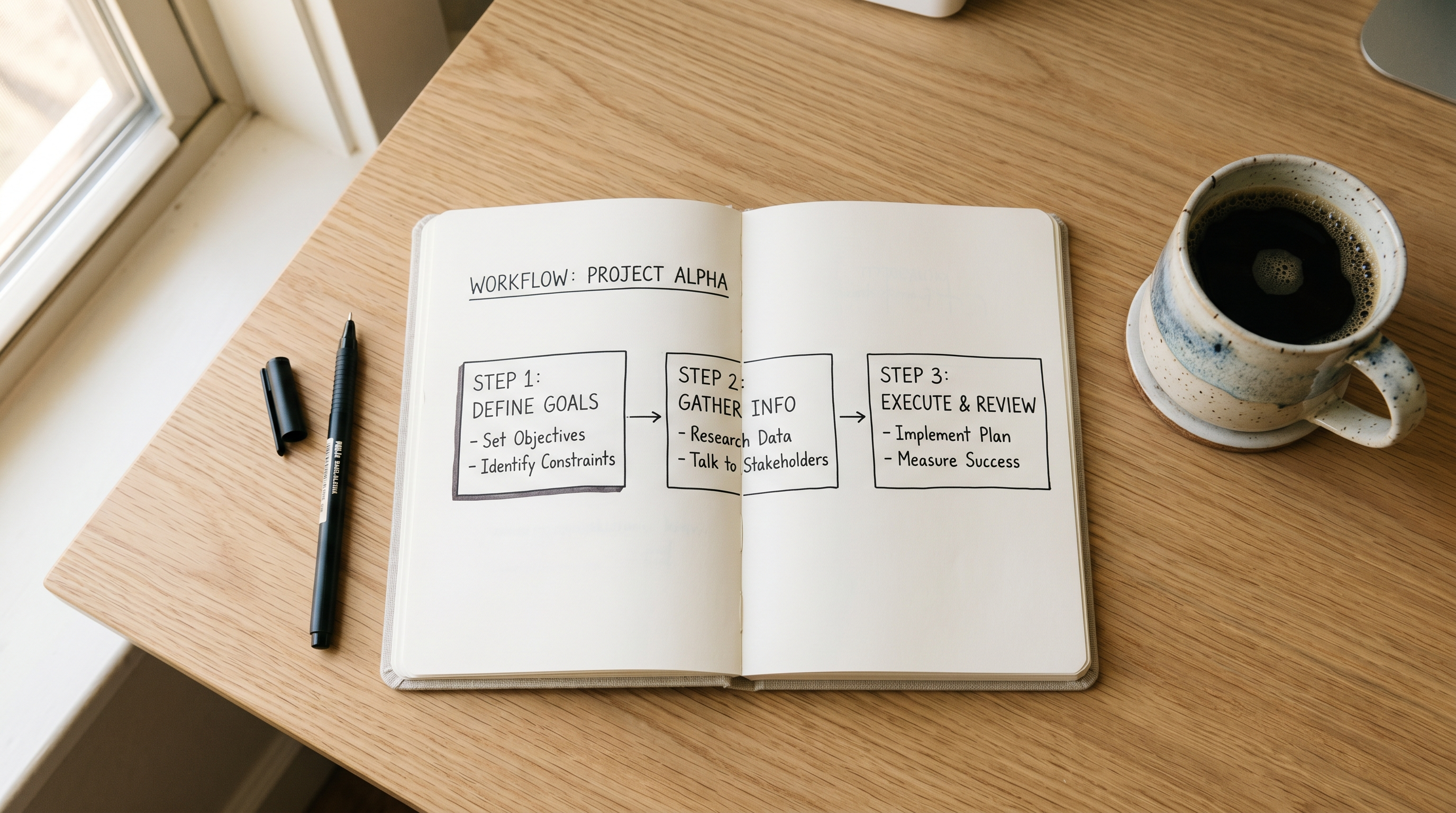
Ask three questions for every process that happens more than once a week:
- What triggers this? A form submission, an email, a calendar event, the clock hitting 9 AM.
- What happens next, step by step, including who touches it?
- What would break if that person was out for a week?
The third question reveals the actual risk. A process that stops working when one person is on vacation isn't a process. It's a dependency. That dependency has a cost whether you've measured it or not.
Once you've mapped the workflow, the automation question almost answers itself. Most service businesses have 3-5 processes that meet all three criteria: high frequency, fully predictable trigger, and held together by one person's attention. Those are the starting points.
Start with the process that has the highest frequency and the lowest judgment requirement. Usually that's lead follow-up, intake data entry, or weekly reporting. Build one. Watch it run. Then move to the next one.
The Bottom Line
The cost of manual work doesn't announce itself. It hides in payroll, in error correction, in the pipeline deals that went quiet because follow-up slipped, in the report that took three hours and could have taken three minutes.
Most businesses that start automating say the same thing afterward: they wish they'd done it sooner. Not because the technology was impressive. Because the hours that came back were spent on things that actually moved the business.
If any of this sounds like your Monday morning, a 30-minute conversation is enough to find out exactly where the cost is hiding. Book a free discovery call. No commitments, just clarity.